Kindred Spirit Chai: honoring the history with each sip
Let’s dig into the colonialist history of the herbal spice trade — and the nation-wide addiction to Pumpkin Spice everything.
Plaid shirts, fall boots, mini pumpkins in a perfect little pile, fallen leaves artfully scattered, and a Pumpkin Spice Latte in hand. Is it even considered fall without that photo?
I don’t remember when this became a full-on cultural phenomenon, but suddenly the U.S. fall season became synonymous with PSL™.
And when we look at what pumpkin spice actually is, we find the real herbal players: nutmeg, clove, cinnamon, allspice, and ginger.
Three of the five show up in Kindred Spirit Chai, which is why I felt called to share their history — one rooted not just in plant medicine, but in bloodlust and profit.
“Pumpkin spice” was coined by McCormick, the American spice company that bottles up these spices with those unforgettable red plastic caps. If you’ve ever tasted it, you know: it’s warming, circulation-boosting, and adds that kick to food and drinks—even when there’s zero pumpkin involved.
Here’s the kicker: None of these spices grow in North America. They’re native to Southeast Asian islands.
So here we are — at the doorway of the darker truth: a colonial history soaked in slavery, corruption, and genocide.
At one point in history, spices were among the most prized—and expensive—trade goods in the world.
In the 1500s, the Portuguese “discovered” the islands (modern-day Maluku Islands of Indonesia) and named them the Spice Islands, launching centuries of violent competition for control. The Portuguese seized control of these islands by exploiting local conflicts.
Then in the 1600s, Europeans smelled profit. The Dutch, primarily through the Dutch East India Company, took control of the highly priced spicesduring the 16th-18th centuries, including Nutmeg, Clove, Cinnamon (although originally from Sri Lanka), and Ginger (while not native to the Spice Islands, ginger plantations were monitored and destroyed to keep the prices high).
The Dutch became one of the most violent spice monopolies in history. They enforced a monopoly over the named spices using slavery, torture, and mass murder on the surrounding islands of the Spice Islands. Villages were burned. People were publicly killed to set an example.
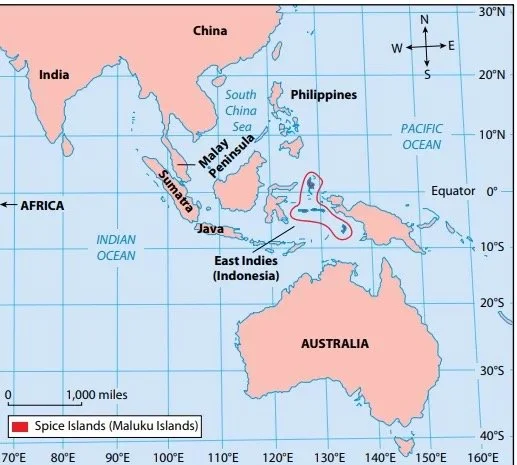
ID: a map of the Makluku Islands, which was named the Spice Islands by the Portuguese
CINNAMON
True cinnamon (Cinnamomum zeylanicum) comes from Ceylon, which is modern-day Sri Lanka, and its history is brutal. The Dutch took over from the Portuguese and tightly controlled cinnamon trade. They guarded their monopoly so fiercely they burned stores of cinnamon in Amsterdam in 1760 to manipulate prices. Eventually the British took control until Sri Lanka gained independence in 1948.
NUTMEG - more in the CLOVE section
Nutmeg (plus clove) originally grew only in the Maluku Islands of Indonesia. Before the Portuguese and Dutch takeover, Indigenous islanders freely traded it with Chinese, Indian, and Arabian merchants long before Europeans knew it existed.
CLOVE
Like with nutmeg, ginger, and cinnamon, the Dutch enforced “extirpation”—systematically burning clove + nutmeg trees on any island they didn’t control. The Banda Islands massacre of 1621 (as a part of Dutch-Portuguese War, also known as the Spice War) remains one of history’s most horrific: around 15,000 people were killed, enslaved, or starved. The Dutch then repopulated the islands with European colonists and enslaved laborers to run clove + nutmeg plantations. Later, a Frenchman, Pierre Poivre, risked execution to smuggle clove seedlings off the islands, breaking the Dutch monopoly and eventually spreading cloves to Mauritius, Zanzibar, and beyond.
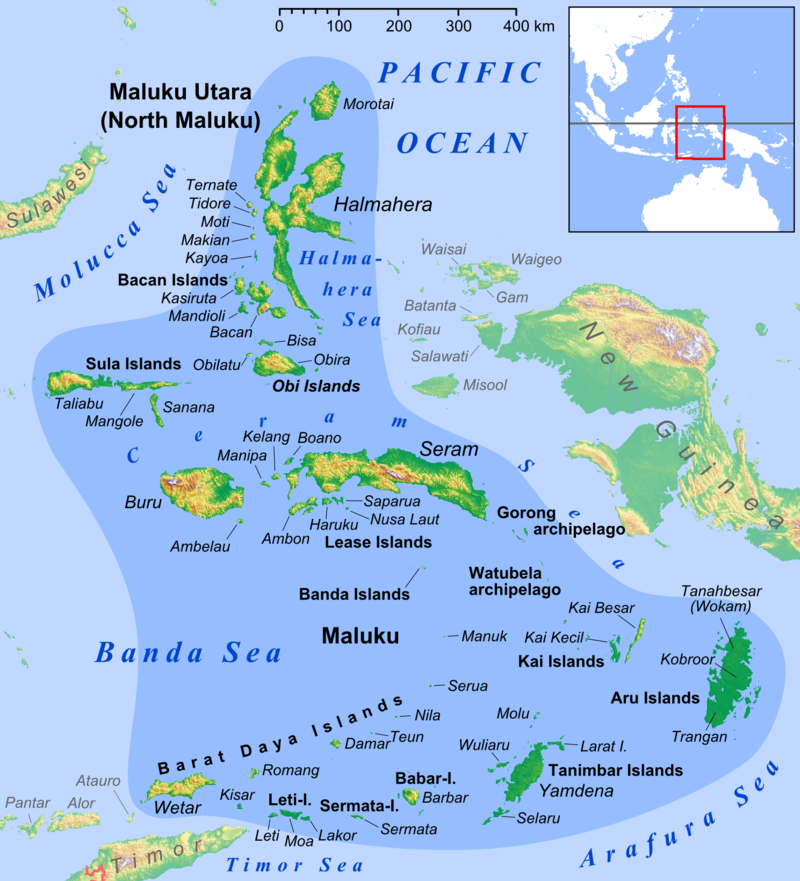
ID: a closer look at the Makluku Islands and where the Banda Islands are on the map (visibly tiny)
GINGER
Indigenous to southern China, ginger spread through Asia by trade. When Europeans got involved, it became another commodity to dominate. The Dutch destroyed ginger plantations on every island except the ones they controlled to maintain a monopoly.
ALLSPICE
Allspice is the outlier. It’s native to the Caribbean and was used by Indigenous peoples in food and medicine long before colonizers arrived. The Spanish misidentified it as pepper and nicknamed it “Jamaican pepper.” Europeans said it tasted like cinnamon + clove + nutmeg + juniper + pepper, so they called it allspice.
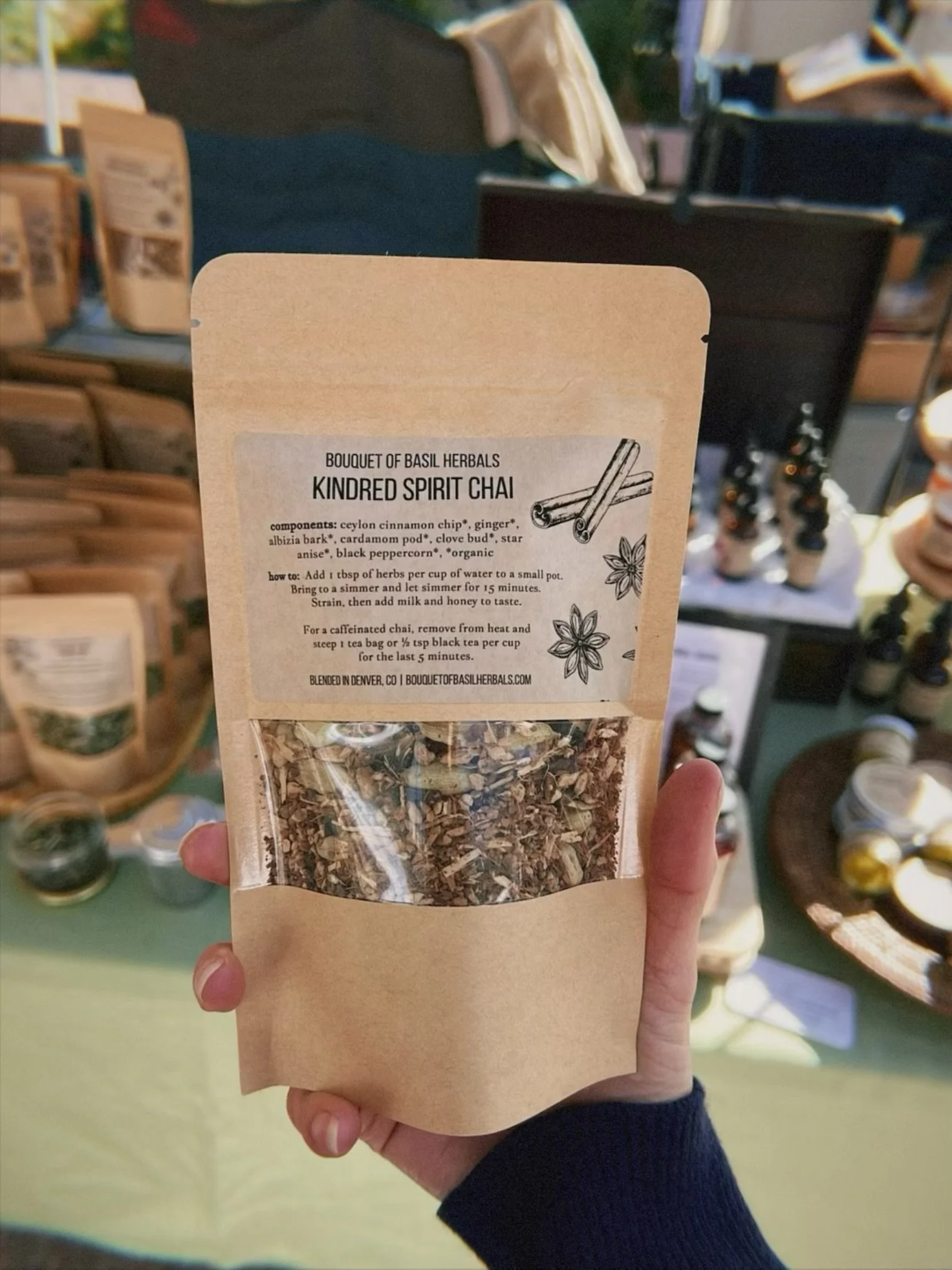
ID: a photo of Kindred Spirit chai in a 4 oz bag
Every time you sprinkle one of these spice into your pumpkin spice cookies or pie, remember that they carry stories. Some of them are not pretty.
By sharing the stories of the herbs that came before us, we keep their purpose and spirit alive. We honor the native people who once cherished them, carrying their legacy forward in each cup and conversation.
It’s always about intention—every sip, every use.
Sharing these stories helps us take informed, mindful sips, one at a time.